Listening to Poetry . . . Through Audiobook?
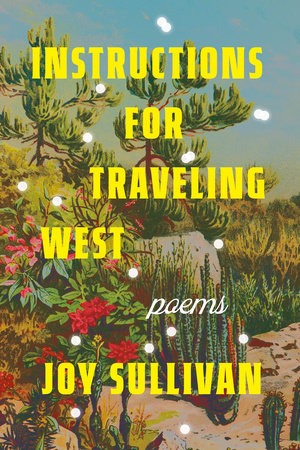
Recently, I picked up the audiobook for Instruction for Traveling West by Joy Sullivan on Libby. I had been interested in this book since it came out, so I decided to try something new and download the audiobook. This was the first and so far only poetry audiobook I have ever read, so I have more thoughts on the format than the content, especially because I really enjoyed the content.
I initially started this book when I had a migraine. I find that sometimes when I can’t use my phone or a physical book to entertain myself during a migraine, audiobooks are the perfect way to distract myself. When this happens, I aim for shorter, more lyrical works so I can enjoy the beauty of the language without following a complicated plot. Poetry is apparently great for this.
There were a couple of elements that took some getting used to when listening to poetry compared to when I listen to long form prose audiobooks. Because of the short length of the poems, sometimes I was a little more distractible and would find my mind wandering more frequently. Even though I kept the audiobook slow, I would have to re-listen to whole poems. However, when I visually read poetry, I also like to reread lines or whole poems to ensure I grasp the full meaning, sit with the content after, or reflect on anything that I may feel about the poem. This rereading is more complicated in an audiobook, but not enough to really dissuade me from relistening or rewinding the audiobook.
A downside that was more impactful on my willingness to listen to a collection of poetry again is the erasure of the physical intentionality of poetry. As an art form, poetry can rely on form and spelling, so listening to the audiobook removes some of the artistic intention from formatting to spelling including potential homophones or double meetings.
There were also a couple of elements of this experience that I really enjoyed. First, I loved that it felt more like I was at a reading or live performance. Instructions for Traveling West was narrated by the author, Joy Sullivan, which made it feel like I was listening to it the way the author intended and not based on my own mental voice. I also enjoyed that it made me slow down. I tend to rush through poetry, to skim the words and not take the time to internalize them, hence the need to reread. Being able to set the speed of the audiobook to a slower setting made the reading experience more intentional and allowed me to give each word the focus it deserves.
Overall, this was an interesting learning experience with an excellent collection of poems. I would love to learn more about the process of recording poetry versus prose. I know it’s different at the editing stage, so I would love to learn more about the audiobook process as a whole and to know more about scripting or directing. In addition, how is directing an author narrating an audiobook different from directing a professional voice actor?
To end, I want to take a moment to talk about the content of this book. Joy Sullivan has such a way with words, and her poetry made me reflect a lot on growing up in California and what “the west” really means to me. In a larger context, it made me reflect on “the west” and its larger reputation among the American experience and conversation of American stereotypes. I loved being pushed to confront something in me that felt so embedded in my personal history. It also made me reflect on how living in a different part of “the west” alters my relationship with “the west” and evolves my feelings on a sense of place.