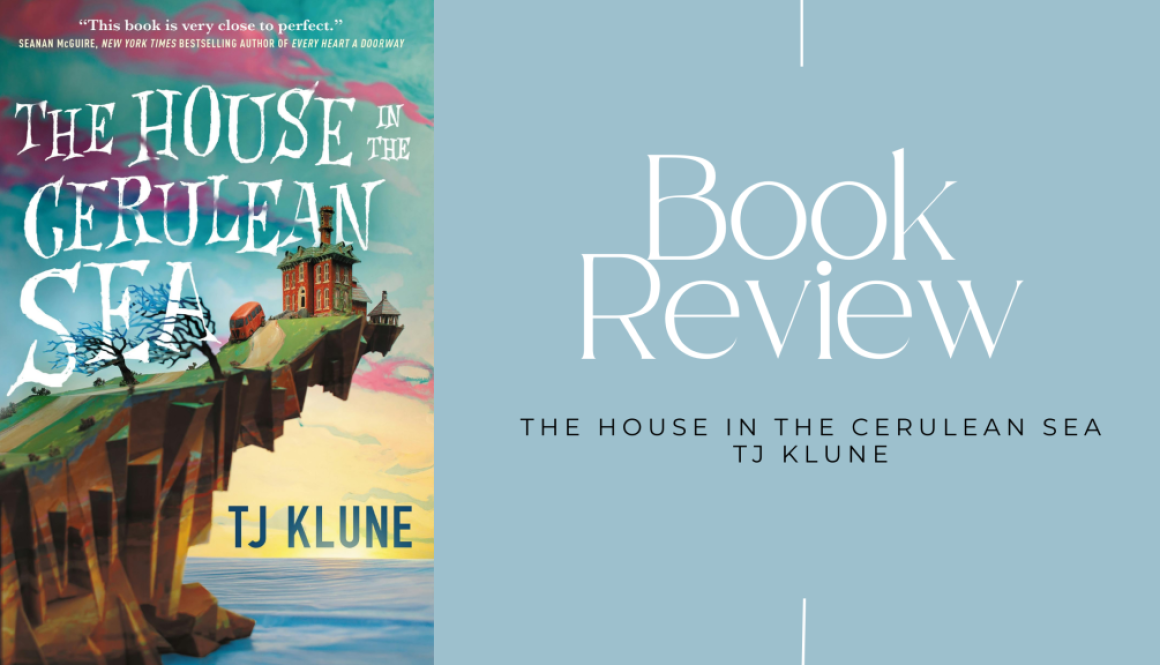
The House in the Cerulean Sea Review
After my productive January of reading—thanks to Storygraph’s January Pages Challenge to log at least one page or minute read every day in January—my February has been a little slower to get into. While I have slowly been working my way through a couple different books, none have been successful in capturing my attention—until this one.
I was lucky enough to find a skip the line copy from my library for The House in the Cerulean Sea while poking around Libby on my day off. My friends told me that listening to it was the way to go, so I was excited to finally find a copy. Let me just say, my friends were right. While I have a feeling this book would have ruined me in the best way no matter the format, I can picture characters and settings more easily when I hear books aloud; so, for me, listening to this book was the best thing to do.
Shelf Talker
I saw that Shelf Awareness has a shelf talker blurb for some of their reviews, and as I work at a bookstore, I thought this would be a great element to have as well as good practice.
Shelf Talker: A cozy fantasy with high enough personal stakes, The House in the Cerulean Sea follows Linus as he evaluates the safety of a magical orphanage, but he finds more than he expects.
Summary
The House in the Cerulean Sea is a triumph of cozy fantasy with high stakes and perfectly lovable characters. Linus, the main character, is a wonderful example of the mundane, a government employee whose job it is to ensure orphanages for magical children are treating those children well. He is sympathetic from the jump, and as the book progresses, his straightforward and “objective” way of viewing the world means that the reader often has the opportunity to read into things that he accepts at face value.
After 17 years at the same job, he is selected to evaluate an orphanage that is hidden from the rest of the world and full of magical children that are slightly more magical than others. Linus is assigned the task of objectively observing and reporting the goings on of the orphanage to “Extremely Upper Management” despite an endearing cast of characters in both the children as well as their mysteriously alluring leader of the orphanage, Arthur.
A heartfelt story with themes of found family, flawed systems, and prejudice. In addition, it has queer characters where queerness feels less like a theme and more a foundation on which the story is built. Their queerness is incidental and not commented on, which is refreshing when coming out and being out have such a focus in the real world.
While this book does have a sequel that I have yet to read, this book wraps everything up in a satisfying way. I think many would be perfectly content to exist with just this book, but as I’ll get into, this world is one I would never complain about revisiting.
Evaluation
I don’t normally read fantasy, and cozy fantasy sometimes gets bumped down my list in favor of more fast-paced books, but this one is enough to get me to dive into the genre at full speed. From what I have heard from others about cozy fantasy books, they usually want to savor the settings and characters, to get lost in the world building and bask in the quiet warmth. The House in the Cerulean Sea fits most of those elements. While it is cozy, and to me it was predictable for it to have the ending it did, the stakes seem surprisingly high. The fate of children is in the hands of a slightly apathetic, dreary governmental department that is led by people who might have a hidden agenda. In the face of prejudice and experiences that don’t immediately impact Linus, the darker reality of the world is slightly more obvious to the reader than it is (initially) to Linus, which propels the plot.
Beyond the quiet comfort of Linus, the characters are lovingly quirky in the way many kids are, from one kid with a quiet passion to write to another with dream to be a bellhop, and others with a slightly more sinister interest in death. They feel like real kids with niche interests and dreams, and they have an optimism paired with the bite of the knowledge that there are mean people in the world. The master of the house, Arthur Parnassus, just wants to ensure the children are safe. He has the most history to uncover and every bit revealed adds embers to the slowest-burn romance that I have read recently and that I savor.
The prose itself is, at times, rather simplistic but with a sense of whimsy and matter-of-factness in the face of absurdity that tie everything together. The content itself would almost read as though for a younger audience if it wasn’t for Linus’s age (40). It is a perfect storybook for adults. I personally felt like it was similar to Welcome to Nightvale in some of the descriptions and fantastical elements that were treated mostly as normal within the confines of the island that houses the orphanage.
My Rec
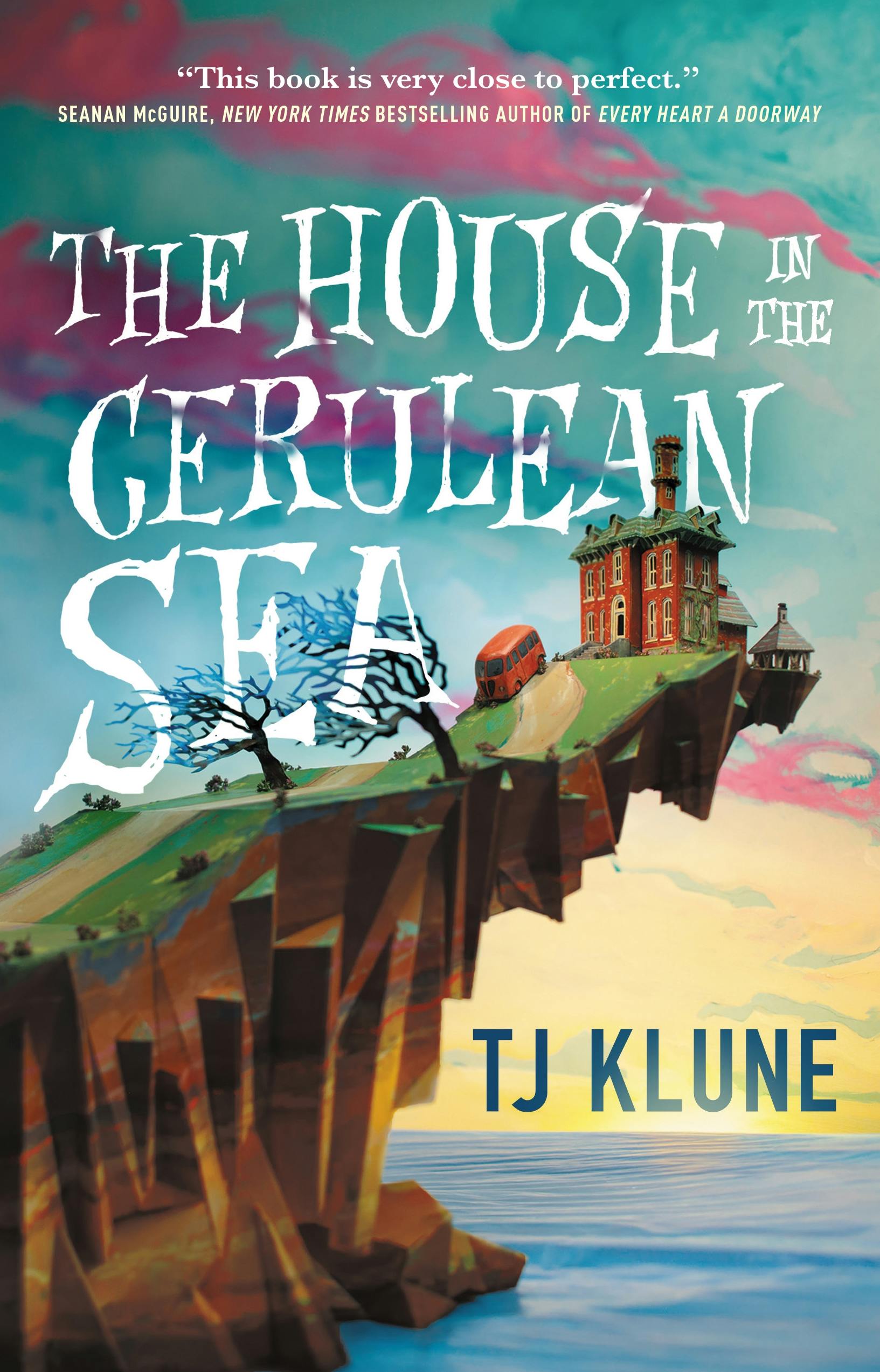
The blurb on the hardcover is “This book is very close to perfect” and I wholeheartedly agree. I want to climb inside the pages and live between the words, pulling them over me like a warm blanket on a cold night. It is the perfect escapist novel for a difficult time. I am not ashamed to admit that I teared up a time or two because of the wholesome moments.
A maybe too niche comparison would be Welcome to Nightvale meets Scooby-Doo and the Ghoul School.
I finished the audiobook in two days and stayed up later than I should have to stay entranced in the world just a little longer. I also bought this book and the sequel so that I have the ability to relisten to it and have the sequel on hand for when I have time. Since finishing it, I have told almost everyone I’ve encountered to read it.
Two thumbs up, five stars.
